
Climbing Rinjani
At 3,726 m, Mount Rinjani is the second-highest volcano in Indonesia. The climb is serious, and it is managed by Gunung Rinjani National Park.
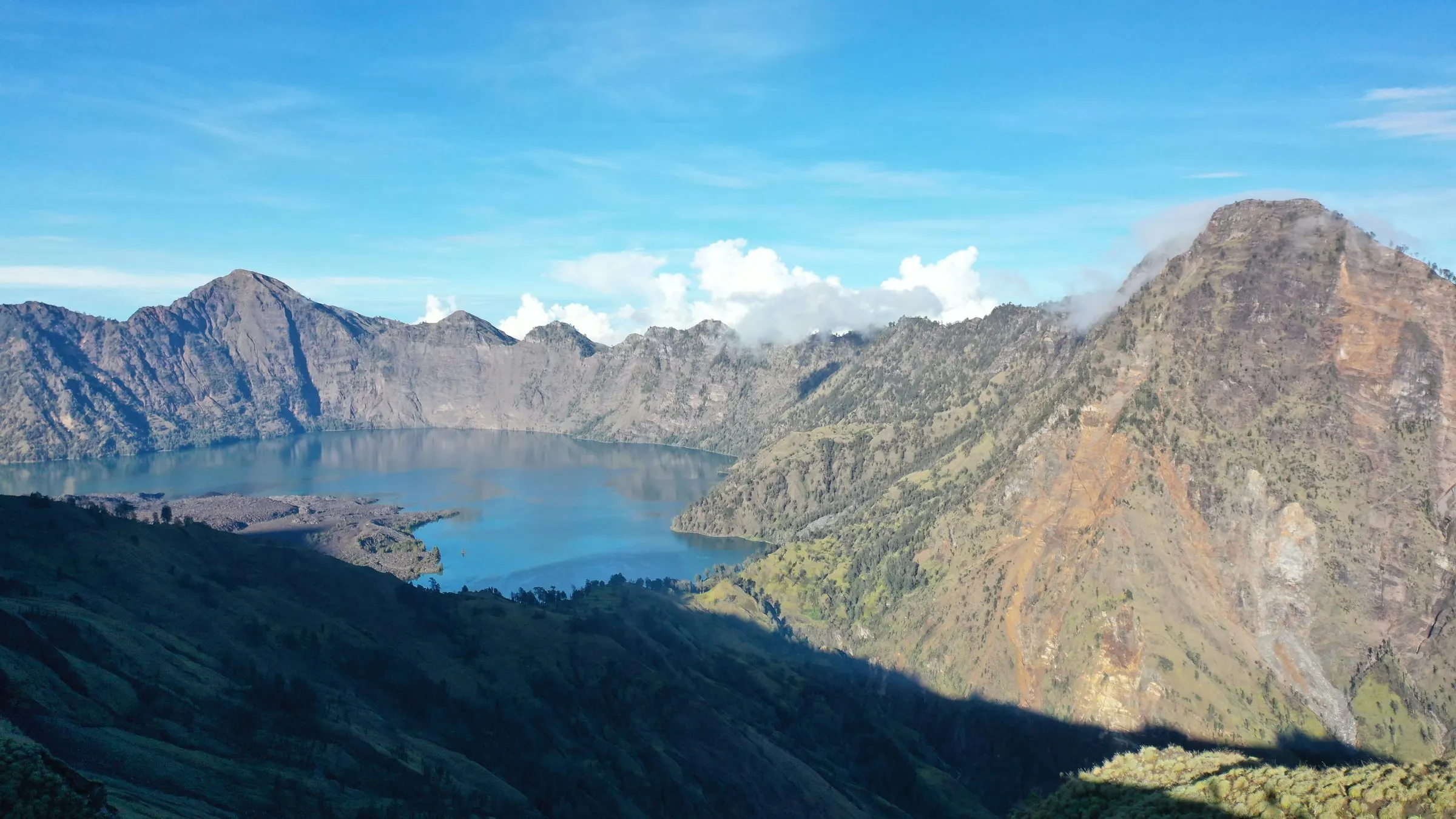
The summit, the caldera rim and Segara Anak lake lie inside Gunung Rinjani National Park (Taman Nasional Gunung Rinjani, TNGR), which sets the rules for climbing: opening seasons, routes, quotas and fees. Bookings are made through the national park's official system. Always check the national park's current announcements before you travel; the mountain closes during the rainy season and whenever volcanic activity or weather makes it unsafe.
[VERIFY: link to the current TNGR booking system and closure dates]
- 3,726 m
- Summit of Rinjani
- 2,000 m
- Segara Anak lake (approx.)
- 2–4 days
- Typical climb
Routes
The main routes start from Sembalun in the east, the usual way to the summit, and Senaru in the north, the usual way to the crater rim and the lake. Other routes start from Torean, Timbanuh and Aik Berik. Many climbers go up from Sembalun and come down to Senaru, crossing the caldera.
[VERIFY: list of routes currently open]
Before you go
- Climb with a registered guide and porters. It keeps you safe and keeps the income in local villages.
- Carry your rubbish down. The national park checks what you bring in and what you bring out.
- Respect the lake. Segara Anak is sacred to Sasak and Balinese Hindu communities; ceremonies such as Mulang Pekelem are held there.
- Prepare for cold. Night temperatures near the rim can fall close to freezing.